
Everything You Need to Know About AI-driven Sales: From Human Persuasion to Autonomous Agents
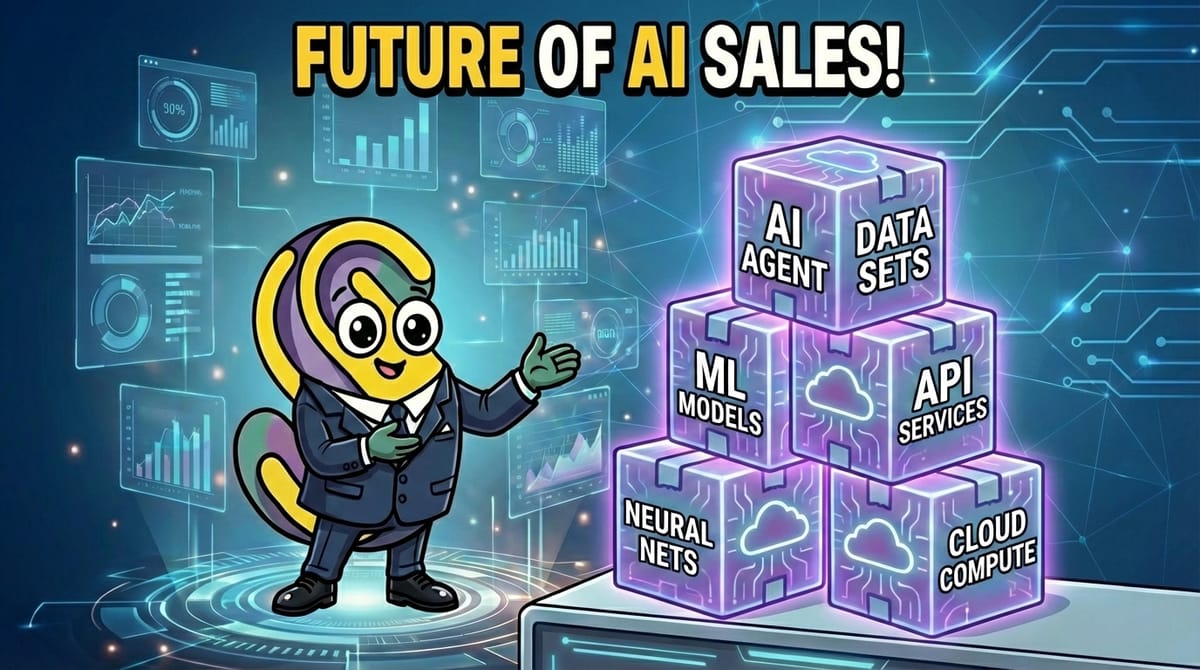
Qualify: The Shift from Human-Led to AI-Driven Sales in Product-Led Growth
Understanding Product-Led Growth and Its Sales Dynamics
Product-Led Growth (PLG) is revolutionizing how companies acquire and expand customers—placing the product at the heart of both user experience and sales. Rather than relying solely on traditional sales teams, PLG leverages self-service models where users engage directly with digital products, often before any human salesperson enters the conversation. This shift has made data-driven insights, automated onboarding, and scalable outreach essential for driving conversions across global markets.
Within these models, sales functions are evolving. Instead of cold calling or mass emailing alone, organizations increasingly use digital touchpoints to identify high-potential users based on their engagement patterns within the product itself. This trend sets a natural foundation for integrating advanced AI solutions into every stage of the buyer journey.
The Limitations of Human-Centric Sales Approaches
Traditional outbound sales face mounting challenges in today's digitally saturated marketplace:
- Low lead quality: Over 68% of B2B teams struggle to generate high-quality leads through manual outreach.
- Resource constraints: Scaling prospecting efforts typically requires hiring more staff—a costly approach that does not always yield proportional returns.
- Inefficiency: Reps spend as little as 28% of their time selling; most hours go toward research or repetitive admin tasks.
- Buyer fatigue: Generic pitches quickly get lost amid crowded inboxes—diluting effectiveness even further.
These obstacles underscore why legacy strategies alone no longer suffice for modern PLG companies aiming for rapid growth and efficient resource allocation.
Emergence of AI-Driven Sales Agents in PLG
Enter agentic AI—the game-changer for outbound sales workflows within Product-Led Growth environments. Autonomous agents now handle many roles previously executed by humans:
“AI agents can plan, execute, and adapt sales tasks much like an entire SDR team would,” notes Landbase’s GTM Omni platform case study.
Leveraging vast datasets (e.g., 300M+ contacts), these agents:
- Identify ideal prospects using real-time signals
- Craft personalized messaging at scale
- Execute multi-channel outreach 24/7
- Learn continuously from interactions to optimize results
Early adopters have reported up to 4–7x higher conversion rates, drastically lower costs per lead, and accelerated pipeline growth—all without expanding headcount. As proof points multiply globally, it’s clear that autonomous AI isn’t just supplementing but actively transforming how modern sales operates within PLG ecosystems.
Understand: How AI Sales Agents Change Decision-Making and Execution
The rise of agentic AI in sales marks a transformative leap from traditional, human-driven persuasion to autonomous execution within Product-Led Growth models. Modern organizations are harnessing these intelligent agents not only for efficiency but also to amplify strategic outcomes—unlocking faster decisions, higher consistency, and scalable personalization across global markets.
Agentic AI Capabilities and Autonomous Execution
Agentic AI stands apart from simple automation by acting independently within go-to-market workflows. Rather than waiting for manual prompts or setup, these systems interpret real-time deal signals and autonomously advance the sales process:
- Context Awareness: Drawing on CRM data, prior interactions, and live buyer signals.
- Task Orchestration: Coordinating content delivery, meeting recaps, next-step recommendations—all without needing constant human oversight.
- Adaptive Learning: Evolving with every cycle as they analyze what works (and what doesn’t) across teams and regions.
“Agentic AI completes work without requiring prompts… It adapts to change so teams can operate with speed and clarity at scale,” notes Highspot’s industry research.
This independence allows sellers—and their leaders—to focus energy on high-value relationship building while routine tasks execute seamlessly in the background.
Improved Decision-Making: Data-Driven and Faster Sales Actions
One of the most compelling advantages of agentic sales agents is data-driven decision-making. By synthesizing insights from diverse sources in real time—including historical deals, ongoing pipeline activity, buyer engagement patterns—they consistently surface optimal actions:
- Speed: Tasks like prioritizing leads or responding to objections happen instantly.
- Accuracy: Decisions reflect up-to-date market conditions rather than lagging intuition.
- Consistency: Best practices propagate automatically across distributed teams.
According to IBM’s 2025 study cited by Highspot:
69% of executives view improved decision-making as the top benefit of adopting agentic AI.
This shift reduces bottlenecks caused by slow handoffs or subjective judgments—leading directly to higher win rates and more predictable revenue growth in competitive PLG environments.
Examples of AI Sales Agents Enhancing Customer Interaction
AI-powered sales agents already drive measurable lift throughout customer journeys:
- A SaaS company using autonomous Deal Agents saw reps receive live coaching mid-deal based on changing prospect behavior—cutting ramp-up times for new hires by weeks.
- Leading e-commerce platforms deploy multi-agent systems that negotiate discounts or bundle offers dynamically depending on user intent detected during checkout flows—a practice McKinsey expects could contribute $3T–$5T globally by 2030.
- In B2B contexts, adaptive playbooks ensure messaging shifts immediately if a buyer’s needs change mid-cycle—increasing relevant touchpoints without extra manual effort.
These examples highlight how agentic workflows not only streamline execution but transform customer experience into one that is proactive, hyper-personalized—and ultimately much harder for competitors relying solely on legacy tactics to match.
Educate: Adoption Trends and AI Sales Infrastructure Essentials
Global Trends in AI Sales Adoption
AI adoption in sales has entered the mainstream, moving well beyond pilot projects to become foundational across industries and company sizes. Recent data from LinkedIn (2025) reveals that 56% of sales professionals now use AI daily, with these users being twice as likely to surpass their targets compared to non-users. This surge is echoed by HubSpot’s 2024 survey, which saw active usage among reps jump from 24% in 2023 to 43% in 2024—a nearly twofold increase within just a year.
The embrace of agentic and generative AI tools isn’t limited to large enterprises; 75% of small businesses have already invested in some form of sales automation or intelligence platform, leveling the playing field through accessible solutions. Executive buy-in is at an all-time high too: Gartner reports that 87% of sales leaders face direct pressure from CEOs and boards to accelerate generative AI deployments.
This rapid uptake translates into tangible business outcomes:
- Early adopters report win rates boosted by over 30%
- Sellers leveraging AI spend less than half their time on admin tasks, reclaiming hours for actual selling
- Productivity gains are measurable even among mid-sized firms thanks to embedded tools like intelligent CRMs or automated meeting schedulers
As organizations worldwide shift toward Product-Led Growth models, integrating autonomous agents becomes not only feasible but essential for sustained competitiveness.
Building AI Sales Infrastructure for Agentic AI
Effective deployment of agentic AI requires more than adopting smart software—it demands a robust infrastructure spanning technology integration, process redesign, and governance frameworks:
- Unified Data Ecosystem: Clean, connected CRM systems remain the backbone; Bain & Company found that companies with harmonized data see faster ROI on automation investments.
- Seamless Tool Integration: Modern platforms must support bi-directional sync between email clients, scheduling apps, analytics dashboards, and core sales databases.
- Real-Time Intelligence Layers: Embedding conversation intelligence or buyer signal trackers allows agents to act contextually at every touchpoint.
- Governance & Compliance Controls: With autonomy comes risk—leading firms establish Generative-AI Ops teams tasked with prompt engineering oversight and model tuning (Gartner predicts 35% will do so by 2025).
- Continuous Training Pipelines: As workflows evolve rapidly alongside tech advancements, ongoing seller enablement ensures both human teams and autonomous agents adapt together.
| Core Component | Strategic Benefit |
|---|---|
| Unified CRM/Data Layer | Reliable insights & personalization |
| Automated Workflows | Admin efficiency & speed |
| Embedded Analytics | Decision-making precision |
| Governance Frameworks | Trustworthiness & compliance |
By investing early in this multi-layered stack—and aligning leadership around its strategic value—organizations create fertile ground where agent-driven execution can thrive alongside traditional relationship-based selling.
Overcoming Adoption Barriers: Strategy and Culture
Despite clear momentum behind adoption trends, many organizations still encounter substantial roadblocks when operationalizing agentic AI:
- Lack of Clear Strategy: McKinsey notes that up to 43% struggle without defined objectives or mapped processes—resulting mostly in isolated pilots rather than transformative change.
- Data Quality Issues: MIT Sloan estimates poor data quality derails up to 85% of failed projects; fragmented records diminish trust both internally and externally.
- Skills Gaps: Only about one-third feel equipped for advanced toolsets; successful transitions hinge on targeted training plus “change champions” embedded within teams.
- Cultural Resistance: Concerns over job loss persist—even though research shows most sellers actually redirect saved time toward higher-value work once routines adjust.
To overcome these hurdles:
“High-performing organizations don’t just roll out new tech—they align strategies top-down while building grassroots participation,” Persana.ai highlights.
Winning approaches combine executive sponsorship with middle-management empowerment (“middle-out” change), prioritize transparency about expected impacts (both benefits AND limitations), invest heavily in practical upskilling—not just theory—and celebrate incremental wins along the journey. By making culture part of infrastructure planning itself rather than an afterthought post-launch, businesses transform skepticism into advocacy—and ensure sustainable progress toward fully intelligent revenue operations.
Stimulate: Strategic Benefits and Outcomes of AI-Driven Sales Agents
The integration of AI-driven sales agents in Product-Led Growth (PLG) environments is more than a technological upgrade—it’s a strategic game-changer. As organizations worldwide adopt agentic AI, the measurable outcomes are reshaping what effective selling means in fast-paced digital economies. Below, we explore three pivotal areas where these autonomous systems deliver transformative gains.
Boosting Sales Efficiency and Conversion Rates
AI-powered sales agents automate time-consuming tasks like lead qualification, follow-up sequencing, and data enrichment—freeing human reps to prioritize high-value interactions. According to recent studies, companies leveraging agentic tools report:
- 25%–30% shorter sales cycles
- Up to 22% higher conversion rates compared with traditional methods
By rapidly analyzing behavioral signals across channels (emails opened, demo requests made), these agents dynamically adjust outreach strategies for each prospect—ensuring no opportunity is missed or delayed by manual bottlenecks. A leading SaaS provider saw scheduled meetings increase by 30% after deploying an AI SDR platform that orchestrated multi-channel engagement at scale.
Enhancing Customer Experience Through Personalization
Today’s buyers expect tailored experiences—and AI delivers just that. Autonomous sales agents tap into unified CRM data and real-time customer inputs to personalize every touchpoint:
- Recommended products based on browsing behavior
- Proactive responses aligned with specific needs or pain points
- Timely follow-ups triggered by buyer intent signals
76% of customers say they’re more likely to purchase from brands demonstrating deep understanding of their preferences. Case studies show businesses adopting personalized AI outreach boost response rates as much as 25%, while significantly strengthening customer loyalty through relevant communication at every stage.
Future-Proofing Sales Strategy with AI
Investing in agentic AI isn’t simply about immediate gains; it’s about building resilience for tomorrow’s challenges. Forward-thinking organizations use autonomous sales infrastructure to:
- Adapt quickly as market conditions shift
- Maintain consistent execution even amid workforce changes
- Harness predictive analytics for accurate forecasting
Reports indicate that over 70% of executives view AI adoption as essential for long-term competitive advantage—with early adopters enjoying both increased revenue growth and enhanced agility when entering new markets or launching products.
“Embracing agentic automation now secures your place among future-ready industry leaders,” notes Highspot's latest research.
In sum: integrating autonomous sales agents isn’t just evolution—it’s strategic necessity for sustained success in modern PLG models.
Transition: Preparing for the Future of Autonomous AI Sales Agents
Emerging Trends in AI and Sales Automation
The next wave of sales automation is already taking shape. AI agents are evolving rapidly, integrating generative models, multi-modal capabilities (text, voice, image), and retrieval-augmented generation to deliver context-aware decisions at scale. Industry giants like Salesforce and Microsoft are embedding agentic copilots across platforms, while startups build domain-specific solutions for verticals like healthcare or finance. The result? By 2026, expect more personalized user journeys, proactive product-led nudges, and seamless integration between human teams and autonomous digital partners—setting new standards for both efficiency and customer delight.
Preparing Your Sales Teams for AI Collaboration
Success with autonomous agents hinges on empowering your people as much as your technology stack. Begin by fostering a learning culture where sellers see AI not as competition but as an extension of their expertise—a smart copilot handling admin so they can focus on relationships. Prioritize hands-on training with real use cases; encourage “middle-out” advocacy by equipping team leads to champion adoption; celebrate quick wins that demonstrate value early on. When teams experience firsthand how agentic systems streamline workflows or surface actionable insights, resistance transforms into enthusiasm—and productivity follows.
Key Considerations for Implementing Agentic AI in Sales
To maximize ROI from agentic AI:
- Prioritize data quality: Reliable CRM input fuels accurate recommendations.
- Evaluate security/compliance rigorously: Especially crucial in regulated sectors.
- Choose scalable platforms: Ensure integrations align with existing tools.
- Iterate continuously: Regularly refine models based on feedback and outcomes.
By blending pragmatic strategy with thoughtful change management today, organizations position themselves at the forefront of tomorrow’s intelligent revenue operations.
AI in Sales 2025: Statistics, Trends & Generative AI Insights (Cirrus Insight) / The State of AI: Global Survey 2025 (McKinsey & Company) / AI Is Transforming Productivity, but Sales Remains a New Frontier (Bain & Company) / The Role of Artificial Intelligence (AI) in Sales (Gartner) / AI agents are reshaping sales at a growing pace (Phys.org)